Nature-based education
It is a truly magical journey to alchemise the topics of each year's curriculum into the knowledge that will guide students through life. Nature inherently demonstrates the universal patterns and forces that underlie all the science, mathematics, historical and current events that we explore at school. Today's children will be living in an unpredictably different world by the time they are adults. Therefore, learning is not simply about acquiring specific information (we have that available at our fingertips these days). Learning requires understanding patterns and recognizing those patterns across disciplines.
Natural ecosystems at all scales demonstrate the complexities of a balanced design. In a world in which human intelligence is needed to repair and restore, deep nature connection is our most reliable resource.
The Waldorf approach
The pedagogical indications of Rudolf Steiner express the necessity for effective education to be a living impulse that whole-heartedly meets each child's developing consciousness. In order to achieve this, Forager Living Arts programs are small by design. We maintain a healthy social group while also offering an intimate teacher:student ratio. The teachers here bring insightful lesson content based on their deep understanding of the student's individual needs.
In Waldorf education, content is presented first as a whole — a nuanced entirety of inspiration and possibility, weaving a mycelial layer of curiosity deep in the imagination of the student, the fruits of which will emerge across subject matters and over time for the rest of their life.
The Middle School Years
Pre-adolescent children are distinguishing themselves from their surroundings. In this natural process, they will toggle between exhibiting counterwill (toward authoritarian forces) and wanting to blend in socially where they want to be accepted. Forager Living Arts Middle School guides students using loving authority and by wisely giving the students an age-appropriate level of freedom to explore their emerging identity.
Our curriculum is designed with an emphasis on virtues such as hopefulness, empathy, kindness, honesty, accountability and community-mindedness. We believe that by affirming each student's inherent virtues, they will step forth with greater confidence, morality, creativity, problem-solving skills, independent thinking and an unwavering belief in their own self worth, complete with complexities, challenges and uncertainties.
Hold On to Your Kids Approach
We have created a social media-free container within which the natural and necessary challenges of adolescence are seen and held compassionately by a loving, embodied community. Our guiding resource, Hold On To Your Kids (Neufeld, Maté), reminds us that children's best guides through this stage of life are the trusted adults that have their best interest in mind. We don't want our children to be too inclined to do what others want them to do (peer-orientation), so we support them in developing autonomy at this stage while not giving them more than they are actually ready to handle.
Learning at Forager Living Arts School
The innate intelligence of the students at the farm already shines brightly — we hear this again and again from field trip hosts, guest teachers and farm visitors. The education these students are receiving here is revolutionary — a pure-intentioned resistance to the technological stronghold that is stealing our collective attention and ability for discernment. And without yet revealing to these still-innocent children the depth of the pain in the world, we are preparing our students by allowing natural elements to fortify their body and spirit.
Being able to learn on the land at Jean's Farm is a privilege in so many ways, and with privilege comes responsibility, which is fortunately inherent in a farm setting. Maria Montessori originally envisioned middle school students on farms for good reasons — farmers are hardworking and are beholden to beings other than themselves. These may be some of the most important impulses to reinforce in middle school-aged children.
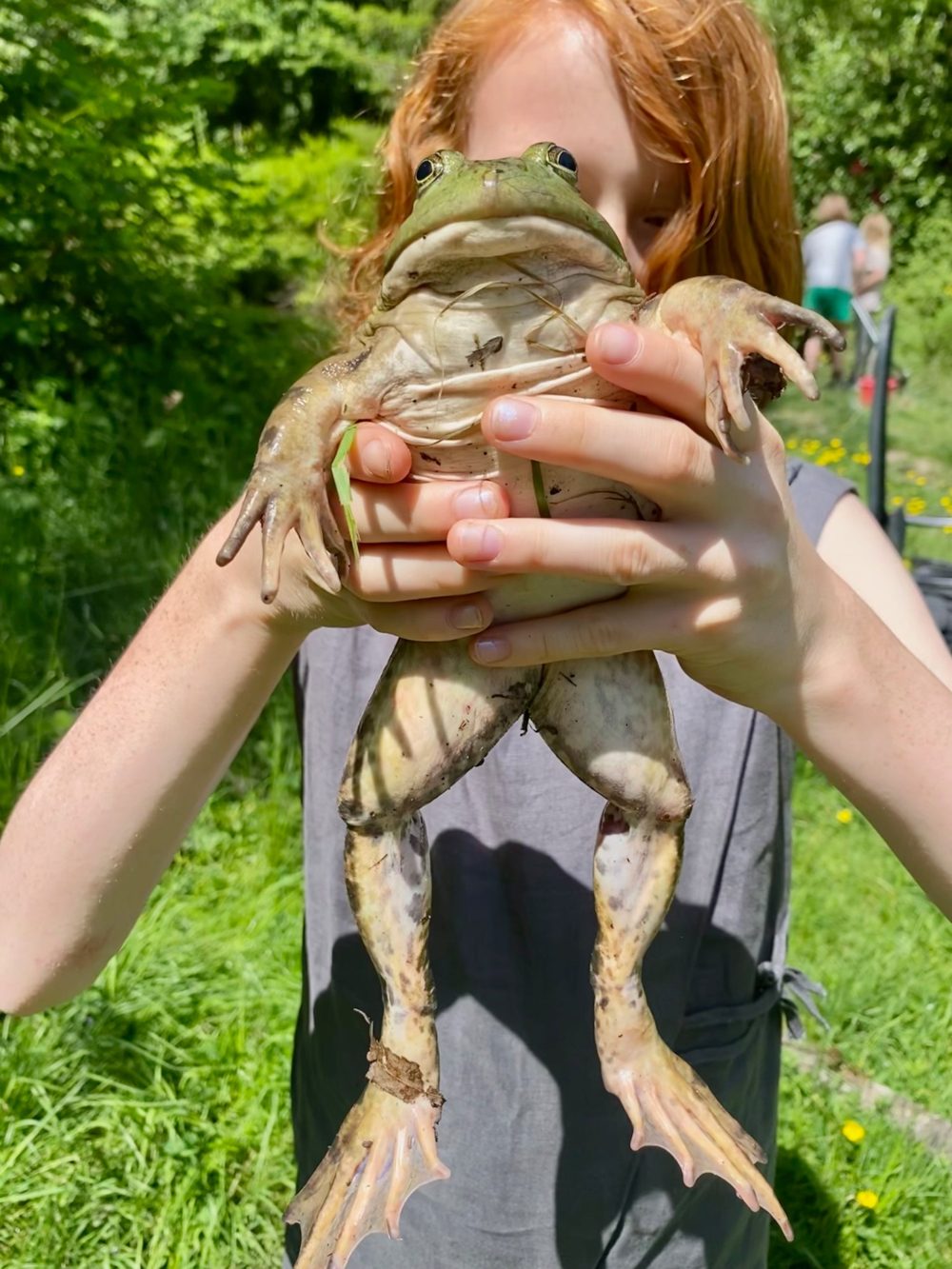
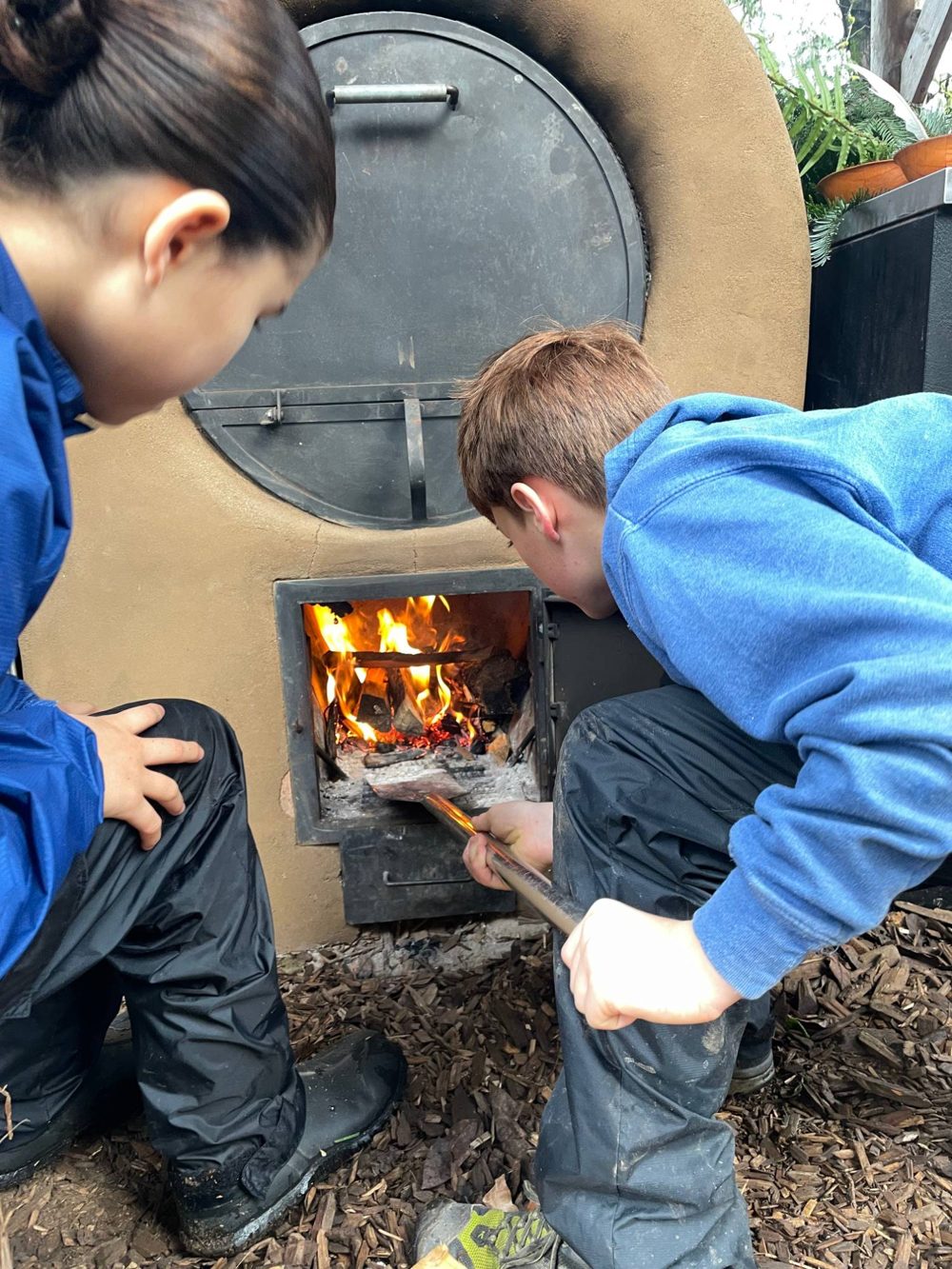
The answer to the riddle of how to balance protecting young children with preparing them for the hardships of the world is that the grit they need in order to become resilient teenagers and young adults is provided by the elements (like weather), physical challenges (like a steep hike, making fire by friction, milking a goat, ploughing a field) and inevitable social discomforts (like taking accountability, and working through conflict).
Coming of Age
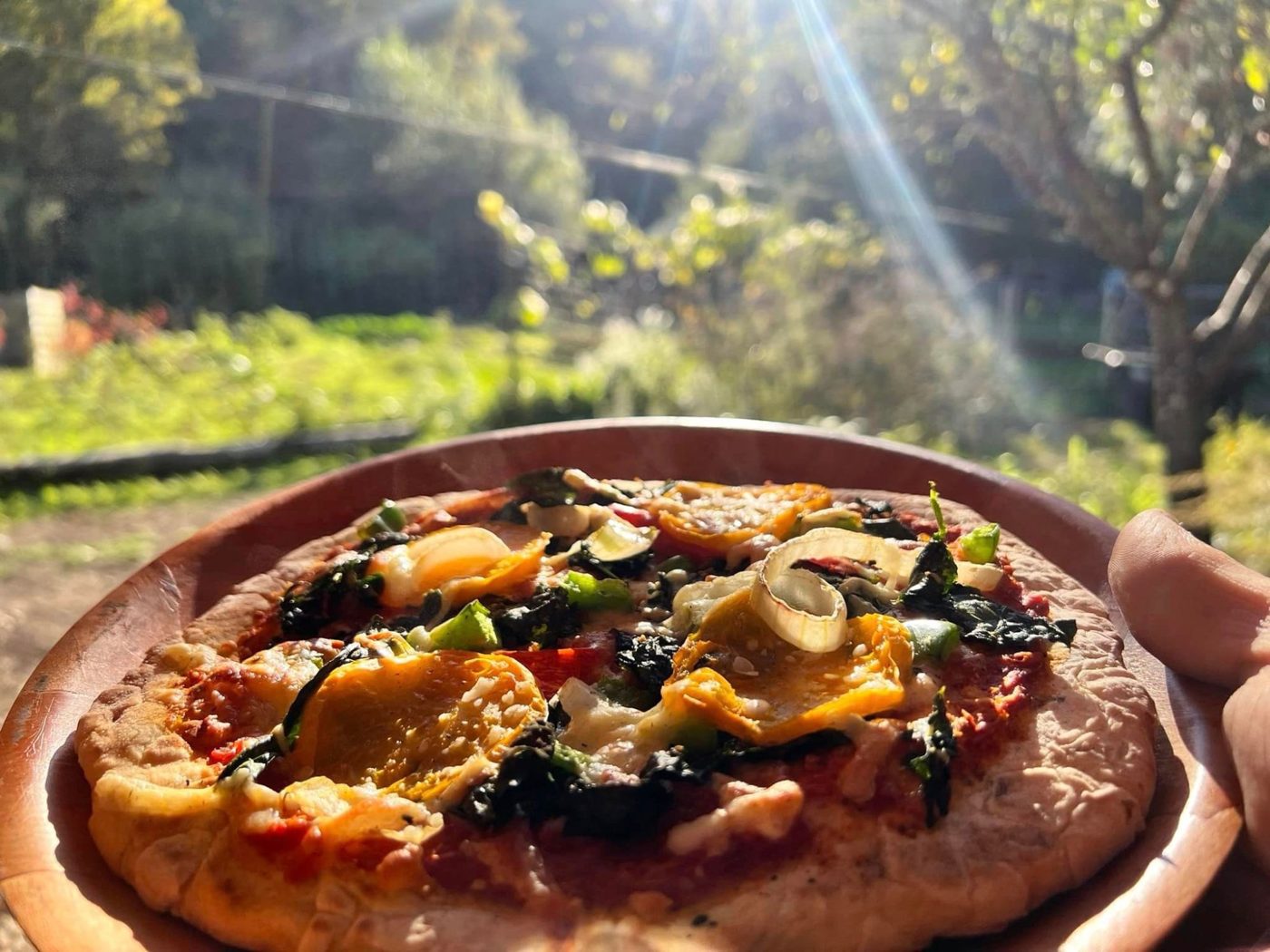
Many of our teachers have extensive training and experience mentoring youth through their coming of age. We touch upon related topics as they naturally arise through both academic and social content. We support the students in understanding their physical and emotional development and the responsibilities that arise with age and maturity. We do this both ceremoniously as well as practically through spontaneous and planned conversations, anonymous questions, and nutrition/cooking/herbalism lessons.
In order to remain age-appropriate, we present content based on student inquiry. This is one of the many reasons for our community agreement that all internet use is monitored by adults — we have greater reassurance that our students are not being exposed to content that is too mature for their current level of understanding. Our goal is to assure that our students are being nourished by what they consume, both physically and emotionally, as they learn to navigate the world with maturity and discernment.
Learning Environment
Our goal is that the students have a sense of feeling rooted, held, safe and cozy in their learning spaces. This is especially important when it's cold outside, so we make sure to have the fires and heaters burning bright in the classrooms so that our bouts with the elements are balanced with respite and relaxation. This matters for effective learning, so that the students can focus on thinking, writing, and so on, without being dysregulated by an uncomfortable sensory experience.